
A mole that looks different than the rest can be easy to ignore, until it starts changing. Maybe it’s darker than it used to be, has an irregular shape, or stands out compared to other spots on your skin. Atypical moles (also called dysplastic nevi) aren’t always dangerous, but they can sometimes resemble melanoma or signal a higher risk for skin cancer. That’s why professional monitoring and medical dermatology care matters. With the right evaluation and routine skin checks, atypical moles can be tracked safely and treated early if needed.
At Manhattan Dermatology, patients receive expert mole evaluation and skin cancer monitoring from leading board-certified dermatologists, including NYU dermatology professors. With two convenient New York City locations and in-office options for mole removal and skin cancer treatment, you can feel confident your skin health is in experienced hands.
What Are Atypical Moles?
Atypical moles are moles that look unusual compared to common moles. They may be larger, have irregular borders, or contain multiple colors. Many people have one or two atypical moles without ever developing skin cancer, but having multiple atypical moles can increase your risk of melanoma.
Atypical moles are not the same as melanoma, but they can look similar, which is why evaluation by a dermatologist is important.
How Do Atypical Moles Look?
Common features of atypical moles include:
- Larger size (often bigger than a pencil eraser)
- Irregular or uneven borders
- Multiple colors (tan, brown, black, pink, or red tones)
- Asymmetry (one half looks different than the other)
- A flat or slightly raised appearance
- A mole that looks different from your other moles
When Should You Be Concerned? (ABCDE Warning Signs)
A helpful way to monitor moles at home is the ABCDE method. Contact a dermatologist if you notice:
- A – Asymmetry: one half doesn’t match the other
- B – Border: edges are irregular, blurred, or jagged
- C – Color: multiple colors or uneven shade
- D – Diameter: larger than 6 mm (about the size of a pencil eraser)
- E – Evolving: changes in size, shape, color, or symptoms
Other warning signs include:
- Itching, tenderness, or pain
- Bleeding, crusting, or oozing
- A new mole appearing after age 30
- A sore that doesn’t heal
How Atypical Moles Are Evaluated
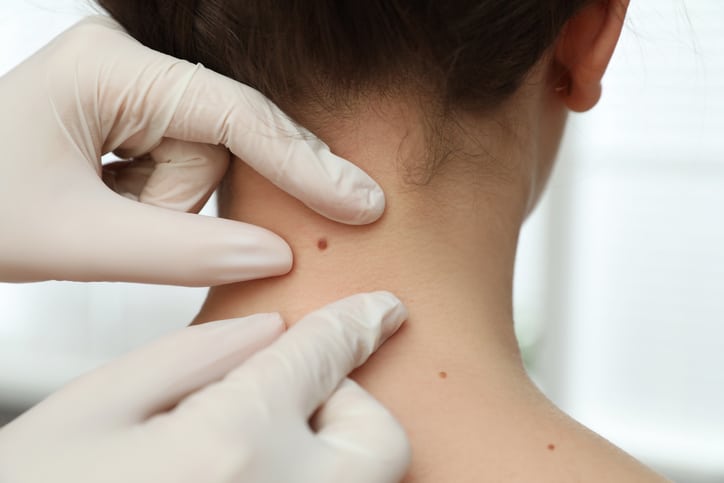
At Manhattan Dermatology, mole evaluations begin with a detailed skin exam. Your dermatologist will look closely at the mole’s shape, color, and pattern, and may use a dermatoscope (a specialized magnifying tool) to examine features beneath the surface.
If a mole looks suspicious, your dermatologist may recommend:
- Photographic monitoring to track changes over time
- A skin biopsy to test the mole for abnormal cells
- Removal of the mole if needed for diagnosis or prevention
Many biopsies are quick and performed right in the office with local anesthesia.
What Happens If Melanoma Is Suspected?
If testing suggests melanoma or a higher-risk lesion, Manhattan Dermatology can guide you through prompt treatment and long-term monitoring. The practice also offers in-office skin cancer removal, including Mohs micrographic surgery for appropriate cancers, as well as comprehensive follow-up skin checks.
Why Choose Manhattan Dermatology for Atypical Mole Evaluation
Monitoring atypical moles requires a trained eye, careful documentation, and a practice equipped to handle everything from diagnosis to treatment. Manhattan Dermatology provides complete skin cancer screening and mole management in one trusted location.
Patients choose Manhattan Dermatology because they offer:
- Board-certified dermatologists with extensive experience in skin cancer detection
- NYU faculty physicians — all providers are dermatology professors
- Comprehensive head-to-toe skin checks and mole monitoring
- In-office biopsies and mole removal for fast, convenient care
- Advanced skin cancer treatment, including Mohs surgery when needed
- Two convenient Manhattan locations on Park Avenue and East 36th Street in Murray Hill and Midtown East
- Flexible scheduling and availability for new patients
Atypical Moles FAQs
Do atypical moles always need to be removed?
No, many atypical moles can be monitored instead of removed. If a mole has concerning features, changes over time, or looks different from your other moles, your dermatologist may recommend a biopsy or removal to check the cells more closely.
How often should atypical moles be checked?
The right timing depends on your personal and family history, number of moles, skin type, and whether any moles have changed. Many people benefit from routine skin cancer screening visits, while those with many atypical moles or a higher melanoma risk may need closer follow-up.
Does having atypical moles mean I will get melanoma?
Having atypical moles does not mean you will develop melanoma. It can mean your risk is higher, especially if you have multiple atypical moles or a family history of melanoma, so professional monitoring and at-home awareness are important.
What happens during a mole biopsy?
During a biopsy, your dermatologist numbs the area and removes part or all of the mole so it can be reviewed under a microscope. This helps determine whether the mole is benign, atypical, or cancerous, including whether it shows signs of melanoma.
What mole changes should I watch for between skin exams?
Watch for changes in size, shape, color, border, height, sensation, or bleeding. A mole that looks noticeably different from your other moles, appears after age 30, crusts, itches, hurts, or does not heal should be checked.
Can atypical moles come back after removal?
A mole may occasionally show pigment again in the same area after removal, especially if some mole cells remain. If color returns in a scar or the area changes, schedule an evaluation so your dermatologist can decide whether it needs monitoring or another biopsy.
Would Mohs surgery be used for an atypical mole?
Mohs surgery is not typically used for an atypical mole that is not cancer. If testing shows certain types of skin cancer, your dermatologist can explain whether Mohs surgery or another treatment is most appropriate.
Protect Your Skin With Atypical Mole Checks in New York, NY
Atypical moles don’t always mean skin cancer, but they should never be ignored. Early evaluation makes it easier to catch concerning changes, get answers quickly, and protect your long-term skin health. Regular skin checks are one of the best tools for early detection and peace of mind.
To schedule an atypical mole evaluation at Manhattan Dermatology in New York, NY, call (212) 683-6073 or (212) 683-6073 to get started.