
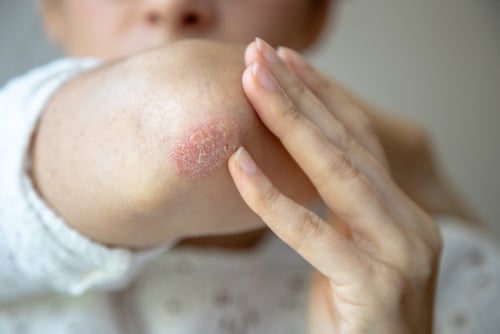
Psoriasis is more than dry skin. It can cause thick, scaly patches that crack, itch, and feel painful, and flare-ups can affect your confidence, comfort, and daily routine. Because psoriasis is a chronic inflammatory condition, it often comes and goes, and what works for one person may not work for another. With the right medical dermatology care, however, psoriasis is highly manageable, and many patients achieve clearer skin and longer-lasting relief.
At Manhattan Dermatology, patients receive comprehensive psoriasis treatment from leading board-certified dermatologists, including NYU dermatology professors. With two convenient locations in Murray Hill and Midtown East, you can access advanced therapies and long-term skin health management tailored to your needs.
What Is Psoriasis?
Psoriasis is a chronic autoimmune skin condition that causes the body to produce new skin cells too quickly. Instead of shedding normally, those cells build up on the surface, forming thickened, inflamed patches called plaques. Psoriasis can affect any area of the body and may vary from mild to severe.
Psoriasis is not contagious, but it is inflammatory, which means it can be linked to broader health concerns, such as joint symptoms or increased risk of certain conditions. Treating psoriasis is about more than cosmetics; it’s about improving your overall comfort and quality of life.
Common Symptoms of Psoriasis
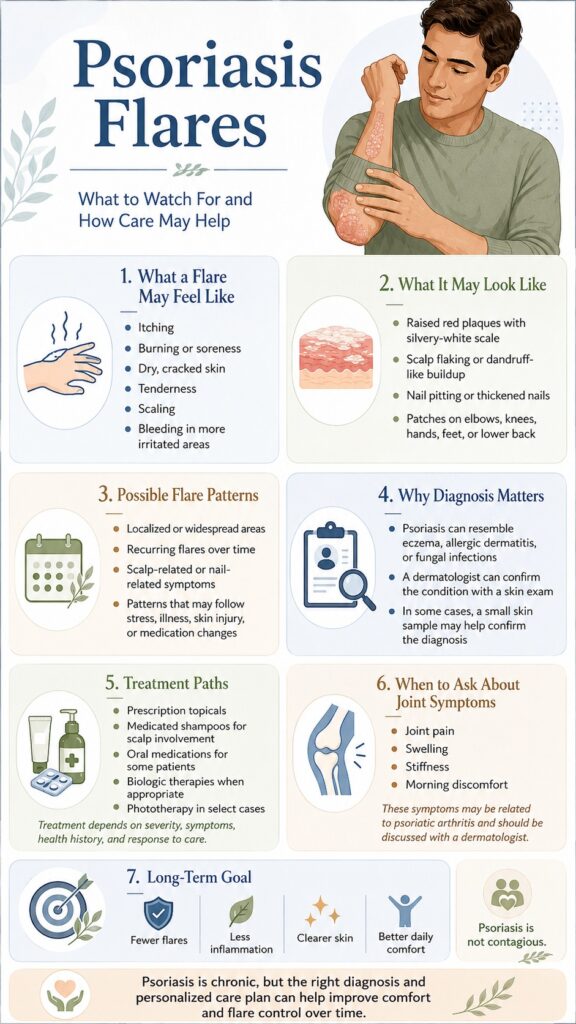
Psoriasis symptoms may look different depending on the type and the area affected. Common signs include:
- Raised, red patches with silvery-white scale
- Itching, burning, or soreness
- Dry, cracked skin that may bleed
- Thickened or pitted nails
- Flaking or dandruff-like scaling on the scalp
- Plaques on elbows, knees, lower back, hands, or feet
Some people also experience psoriatic arthritis, which can cause joint pain, swelling, and stiffness, especially in the fingers, toes, knees, and lower back.
Types of Psoriasis
Your dermatologist will determine which type of psoriasis you have, since treatment can vary.
Common types include:
- Plaque psoriasis (most common): thick, raised plaques with scale
- Guttate psoriasis: small, drop-like spots often triggered by infection
- Inverse psoriasis: smooth, red patches in skin folds (underarms, groin)
- Pustular psoriasis: white pustules with surrounding redness
- Erythrodermic psoriasis: rare, widespread redness and peeling that requires urgent care
- Scalp psoriasis: scaling and inflammation on the scalp and hairline
How Psoriasis Is Diagnosed
Psoriasis is typically diagnosed through a clinical skin exam. Your dermatologist may evaluate the pattern of plaques, the presence of scaling, and nail or scalp involvement. In some cases, a small skin sample (biopsy) may be taken to confirm the diagnosis and rule out similar conditions such as eczema, allergic dermatitis, or fungal infections.
Psoriasis Treatment Options at Manhattan Dermatology
Psoriasis care is highly personalized. The goal is to reduce inflammation, slow rapid skin cell production, relieve itching, and prevent flare-ups. Manhattan Dermatology offers a full spectrum of medical dermatology options, from prescription topicals to advanced therapies for moderate to severe cases.
Treatment options may include:
Topical Treatments
Often used for mild to moderate psoriasis.
- Prescription corticosteroids
- Vitamin D analogs
- Retinoids
- Calcineurin inhibitors (often for sensitive areas)
- Medicated shampoos for scalp psoriasis
Oral Medications
May be recommended for more widespread psoriasis or frequent flares.
- Anti-inflammatory medications
- Immune-modulating therapies (based on severity and health history)
Biologic Therapies (Injectable Treatments)
For moderate to severe psoriasis, biologics can target specific immune pathways driving inflammation. These treatments can be highly effective for skin symptoms and may also help with joint involvement in psoriatic arthritis.
Light Therapy (Phototherapy)
In select cases, controlled UV exposure can help reduce plaques and inflammation. Your dermatologist will determine whether phototherapy is appropriate based on your skin type and psoriasis severity.
Why Choose Manhattan Dermatology for Psoriasis Treatment
Managing psoriasis takes expertise, consistency, and long-term support. Manhattan Dermatology offers advanced care for chronic skin conditions in a state-of-the-art setting, with board-certified dermatologists who treat psoriasis daily and understand its impact on your life.
Patients choose Manhattan Dermatology because they offer:
- Board-certified dermatologists with extensive experience treating psoriasis
- NYU faculty physicians — all providers are dermatology professors
- Comprehensive care for chronic conditions like psoriasis, eczema, rosacea, and allergic dermatitis
- Advanced treatment options, including biologics and long-term management plans
- Two convenient New York City locations on Park Avenue and East 36th Street
- Personalized care designed to reduce flare-ups and improve quality of life
Get Psoriasis Relief With Expert Care in New York, NY
Psoriasis can be unpredictable, uncomfortable, and frustrating, but it is treatable. With the right diagnosis, a personalized plan, and access to advanced therapies, many patients achieve clearer skin, fewer flare-ups, and better long-term control.
To learn more about psoriasis treatment in New York, NY, call (212) 683-6073 or (212) 683-6073 to get started.