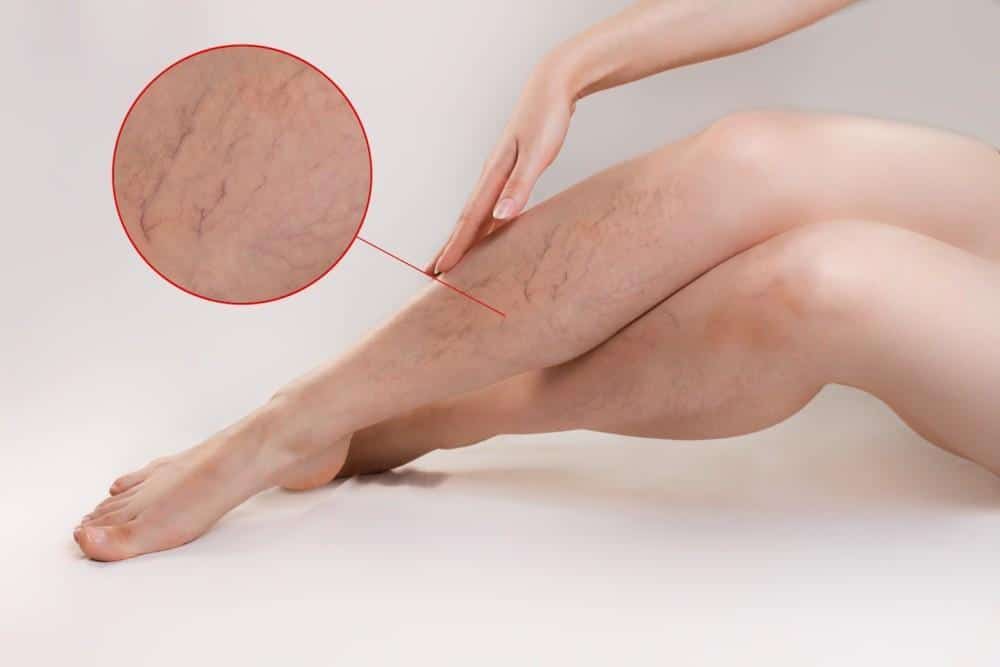
If you have spider veins, you’re in good company: About four in five adults — up to 80% of men and 85% of women — develop spider telangiectasias, or damaged surface veins and capillaries that look like sprawling red, blue, or purple webs across the skin.
Unlike varicose veins and other larger varicosities, spider veins aren’t necessarily a sign of underlying venous disease. Often, the worst thing about them is their appearance and the possibility that they may worsen, spread, or sprawl even farther.
Luckily, our expert team at Manhattan Dermatology can help you get rid of unsightly spider veins in no time flat — and winter is the perfect season to schedule your minimally invasive vein removal treatment. Here’s why.
A short tutorial on spider veins
Spider veins are weblike dilated veins that appear as a visible latticework of vascular damage and abnormality. They develop when an area of smaller, interconnected blood vessels swells, distorts, or ruptures. Most spider veins occur in one of two places:
On the lower extremities
Lower extremity spider veins commonly appear along the calf, shin, thigh, or behind the knee. They’re smaller, milder, and closer to the skin than varicose veins, but they develop in a similar way — through impaired vascular function and sluggish circulation.
Like the large leg veins they branch out from, smaller leg veins and capillaries often work against gravity. This extra strain can weaken their internal valves, slow blood flow, increase pressure, and cause the affected vessels to dilate and distort.
When small vein networks become swollen and twisted, web-like spider veins are the result.
On the cheeks and nose
Facial spider veins typically appear on the nose and/or cheeks. Excess sun exposure is the most common cause of this conspicuous form of vein damage, but prominent sprawling facial veins and burst capillaries can also occur with a skin condition called rosacea, or from lifestyle factors like alcohol consumption.
Making spider veins disappear
Luckily, spider veins are highly treatable, and we offer two effective vein removal solutions at Manhattan Dermatology:
Sclerotherapy
As the gold-standard treatment for lower extremity spider veins, this vein ablation technique involves injecting a sclerosing agent into the unwanted veins. This chemical solution irritates the veins, causing them to swell shut, collapse, and fade away.
Laser therapy
We treat smaller facial veins with noninvasive laser treatments. The VBeam® or Cutera Excel V+ cosmetic lasers send short bursts of thermal energy into the unwanted veins, gently heating them from the inside and causing them to shrink and dissolve over time.
Winter for spider vein removal
Winter is the ideal time for spider vein treatment because it allows for more comfortable recovery conditions and supports the timeline required for visible results. There are five key advantages of treating spider veins in the wintertime:
Reduced sun exposure
Skin areas treated by both lasers and sclerotherapy are sensitive to the sun’s ultraviolet rays, which can cause permanent skin discoloration or hyperpigmentation.
While you need to wear sunscreen on exposed treatment areas following spider vein treatment, the shorter days, more concealing clothing, and increased time indoors during winter can help protect your skin during this vulnerable post-treatment phase.
Easier compression wear
Post-treatment recovery for lower extremity sclerotherapy requires wearing compression stockings for several weeks to support healing and improved circulation. These garments are more comfortable in cooler temperatures — and easier to hide under winter layers.
Discreet recovery
Sclerotherapy can cause mild, temporary bruising and skin redness. Winter wardrobe choices (e.g., pants, leggings, long skirts) can help you feel less self-conscious as you recover.
Minimized swelling
Summer heat dilates your blood vessels, which can exacerbate temporary swelling after sclerotherapy and laser therapy. Colder winter air constricts vessels, helping to keep post-treatment discomfort and inflammation to a minimum.
Clear, summer-ready skin
Spider veins take time to fade, and full clearance may require multiple sessions spaced weeks apart. Treating your spider veins now, in the winter, means having gorgeously clear skin by the time warmer weather — and more revealing clothing — arrive.
Spider vein care in Manhattan
Are you ready to see your spider veins fade away? Now’s the perfect time to schedule your vein clearance treatment at Manhattan Dermatology. We have two New York City offices: one in Murray Hill, Manhattan, and another in the borough’s Midtown East neighborhood.