
A rough, scaly patch that won’t smooth out, even with moisturizer, may be more than just dry skin. Actinic keratosis (AK) is a common precancerous skin condition caused by long-term sun exposure. While AKs are not skin cancer, they can develop into squamous cell carcinoma if left untreated. The sooner you address actinic keratosis with medical dermatology treatment, the easier it is to remove and the better you can protect your skin long term.
At Manhattan Dermatology, patients receive expert evaluation and treatment for actinic keratosis from leading board-certified dermatologists, including NYU dermatology professors. With two convenient New York City locations and in-office treatment options, you can get effective care that helps prevent skin cancer and supports healthier skin.
What Is Actinic Keratosis?
Actinic keratosis is a precancerous growth that forms when skin cells are damaged by ultraviolet (UV) radiation from the sun or tanning beds. AKs occur most often in areas that receive frequent sun exposure over the years.
AKs are very common, especially in people with fair skin and a history of significant sun exposure. Even if the spots feel small, they can signal deeper sun damage and a higher risk for future skin cancers.
Signs of Actinic Keratosis
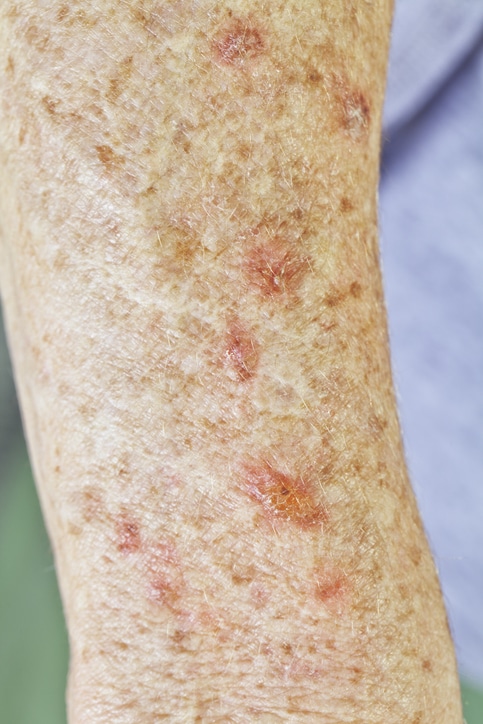
Actinic keratosis often feels like sandpaper, sometimes before it’s even easy to see.
Common signs include:
- Rough, scaly, or crusty patches
- Pink, red, or skin-colored spots
- A flat or slightly raised surface
- A lesion that may sting, burn, itch, or feel tender
- A patch that bleeds or becomes irritated
- A “horn-like” growth (a thicker form of AK)
Because AKs can resemble eczema, psoriasis, or normal aging spots, a dermatologist evaluation is the safest way to confirm the diagnosis.
Why Treat Actinic Keratosis?
Actinic keratosis is considered precancerous because it has the potential to turn into squamous cell carcinoma (SCC). Not every AK becomes cancer, but there’s no reliable way to predict which ones will. Treating AKs early helps reduce your risk and prevents lesions from becoming thicker, more persistent, or more difficult to treat later.
Treatment also allows your dermatologist to assess whether a spot is truly an AK or whether it needs biopsy to rule out skin cancer.
Actinic Keratosis Treatment Options
Treatment depends on how many AKs you have, where they are located, and how thick they are. Manhattan Dermatology offers both lesion-specific and field therapies to treat AKs effectively.
Common treatment options include:
Cryotherapy (Freezing)
One of the most common treatments for isolated AKs. Liquid nitrogen is applied to freeze the lesion, causing it to blister and peel away over several days.
Topical Medications
Prescription creams can treat multiple AKs at once, especially when sun damage covers a broader area (often called “field treatment”). These medications help target precancerous cells and improve overall skin quality.
Curettage or Removal
Thicker AKs may be gently scraped away or removed by your dermatologist, sometimes with additional techniques to control bleeding and reduce recurrence.
Photodynamic Therapy (PDT) or Other Advanced Options
In select cases, light-based therapies may be recommended for widespread sun damage and multiple AKs, particularly on the face or scalp.
Your dermatologist will recommend the best option based on your skin type, lifestyle, and treatment goals.
Why Choose Manhattan Dermatology
Treating actinic keratosis is about prevention, early detection, and long-term skin health. Manhattan Dermatology provides comprehensive care with advanced expertise in diagnosing and managing precancerous lesions and skin cancer concerns.
Patients choose Manhattan Dermatology because they offer:
- Board-certified dermatologists with extensive experience treating AKs
- NYU faculty physicians — all providers are dermatology professors
- Comprehensive head-to-toe skin checks and monitoring
- In-office treatments for actinic keratosis and suspicious lesions
- Skin cancer expertise, including removal and Mohs surgery when needed
- Two convenient locations on Park Avenue and East 36th Street in Murray Hill and Midtown East
- Personalized prevention plans to help protect long-term skin health
Treat Actinic Keratosis Early in New York, NY
Actinic keratosis may seem minor, but it should be taken seriously. To schedule an actinic keratosis evaluation or treatment at Manhattan Dermatology in New York, NY, call (212) 683-6073 or (212) 689-9587 today.