
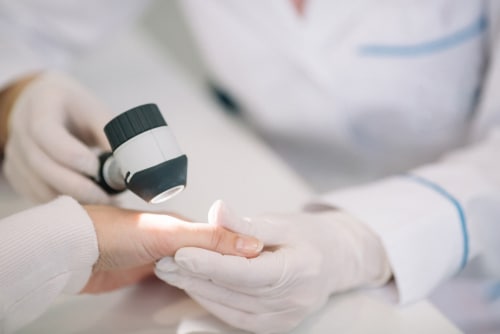
Melanoma is the most serious type of skin cancer, and it can develop in places you don’t expect, sometimes from a mole you’ve had for years or a new spot that seems harmless at first. What makes melanoma especially concerning is how quickly it can grow and spread if it isn’t caught early. The good news is that early detection and medical dermatology care dramatically improve outcomes, and routine skin checks can often identify melanoma before it becomes dangerous.
At Manhattan Dermatology, patients receive expert melanoma screening, diagnosis, and treatment from leading board-certified dermatologists, including NYU dermatology professors. With two convenient New York City locations and in-office options for biopsy, mole removal, and skin cancer care, you can feel confident you’re receiving thorough, experienced medical attention.
What Is Melanoma?
Melanoma is a type of skin cancer that develops in melanocytes, the cells that produce pigment (melanin), which gives skin its color. While melanoma is less common than basal cell carcinoma or squamous cell carcinoma, it is more likely to spread to other parts of the body if not treated early.
Melanoma most often appears on sun-exposed areas, but it can develop anywhere.
Signs and Symptoms of Melanoma
Melanoma often appears as a new or changing mole, but it can also develop as a dark spot that doesn’t look like a typical mole. The ABCDE rule is one of the best tools for identifying warning signs:
- A – Asymmetry: one half doesn’t match the other
- B – Border: edges are uneven, blurred, or jagged
- C – Color: multiple colors or uneven shading
- D – Diameter: larger than 6 mm (about a pencil eraser), though melanomas can be smaller
- E – Evolving: changes in size, shape, color, or symptoms
Other warning signs include:
- A mole that itches, bleeds, crusts, or becomes tender
- A spot that looks very different from your other moles (the “ugly duckling” sign)
- A dark streak under a nail
- A sore that doesn’t heal
If you notice any of these changes, it’s important to schedule an evaluation right away.
Melanoma Treatment Options
Melanoma treatment depends on how early it is detected and how deeply it has grown.
Treatment may include:
- Surgical excision (removal of the melanoma with a margin of healthy skin)
- Additional excision if the initial biopsy shows deeper involvement
- Lymph node evaluation (in select cases)
- Ongoing monitoring and regular skin exams
- Referral for advanced oncology care when necessary for higher-stage melanoma
Why Choose Manhattan Dermatology for Melanoma Care
When it comes to melanoma, expertise matters. Manhattan Dermatology offers comprehensive screening, in-office biopsy, and skin cancer treatment in a trusted, state-of-the-art environment.
Patients choose Manhattan Dermatology because they provide:
- Board-certified dermatologists experienced in melanoma detection and treatment
- NYU faculty physicians — all providers are dermatology professors
- Thorough head-to-toe skin checks and mole monitoring
- In-office biopsies and surgical removal for suspicious lesions
- Advanced skin cancer care, including Mohs surgery for appropriate cases
- Two convenient New York City locations on Park Avenue and East 36th Street
- Long-term monitoring and prevention planning to protect future skin health
Protect Your Health With Melanoma Screening in New York, NY
Melanoma is serious, but early detection saves lives. If you’ve noticed a changing mole, a new spot, or anything that looks unusual, getting it checked promptly can make all the difference.
To schedule a melanoma screening or mole evaluation at Manhattan Dermatology in New York, NY, call (212) 683-6073 or (212) 689-9587 today.