
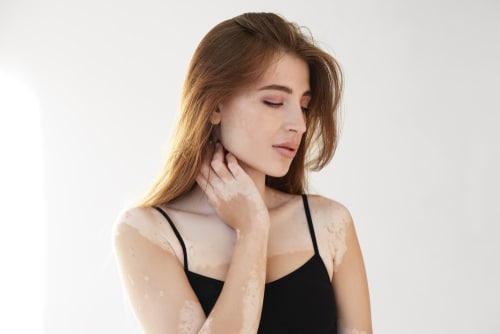
Vitiligo causes areas of skin to lose pigment, creating white or light patches that can appear anywhere on the body. While vitiligo isn’t harmful or contagious, it can have a major impact on confidence and quality of life. The right medical dermatology care can help you understand what’s happening, slow progression, and explore treatment options that support more even-looking skin.
At Manhattan Dermatology, patients receive expert vitiligo care from leading board-certified dermatologists, including NYU dermatology professors. With two convenient locations in Murray Hill and Midtown East, you can access personalized treatment plans designed to protect skin health and support your goals.
What Is Vitiligo?
Vitiligo is a chronic skin condition that causes pigment loss when melanocytes (the cells that produce melanin) stop functioning or are destroyed. This leads to patches of skin that appear lighter than the surrounding area. Vitiligo can affect people of all skin tones, but it may be more noticeable in medium to darker skin due to contrast.
Vitiligo can appear on:
- Face (around eyes and mouth)
- Hands and fingers
- Arms, legs, and feet
- Underarms and groin
- Scalp and hair (can cause white hair in affected areas)
- Around body openings (lips, nostrils, genitals)
Vitiligo is not contagious and is not caused by infection.
Common Signs of Vitiligo
Vitiligo most often presents as:
- White or lighter patches of skin
- Patches that gradually enlarge over time
- Symmetrical areas of pigment loss (often on both sides of the body)
- Premature whitening or graying of hair, eyebrows, or eyelashes
- Areas that are more sensitive to sunburn due to reduced melanin
Some people develop vitiligo slowly over years, while others notice changes more quickly.
Vitiligo Treatment Options
Vitiligo treatment is personalized based on how widespread it is, how quickly it’s changing, and what outcomes you want. Some patients focus on slowing progression, while others want to encourage repigmentation and improve tone balance.
Treatment options may include:
Prescription Topical Treatments
Topical medications may help reduce inflammation and encourage pigment return in certain areas. These are often used for localized vitiligo or early-stage patches.
Light Therapy (Phototherapy)
Phototherapy can help stimulate melanocytes and promote repigmentation. It may be recommended for more widespread vitiligo or areas that don’t respond well to topical therapy. Treatment is typically done over a series of sessions.
Advanced Therapies
Depending on your condition and medical history, your dermatologist may recommend additional options to help stabilize vitiligo and improve repigmentation over time.
Cosmetic Support and Skin Camouflage
While medical treatment is working, some patients use cosmetic camouflage products or specialized makeup to help even tone. Your dermatologist can provide recommendations that are gentle and safe for sensitive skin.
Because vitiligo results vary, your dermatologist will discuss realistic expectations and how to measure progress over time.
Why Choose Manhattan Dermatology for Vitiligo Care
Vitiligo treatment requires experience, long-term planning, and access to advanced therapies. Manhattan Dermatology provides expert care for pigment disorders and chronic skin conditions with personalized guidance and a supportive approach.
Patients choose Manhattan Dermatology because they offer:
- Board-certified dermatologists experienced in treating vitiligo and pigment disorders
- NYU faculty physicians — all providers are dermatology professors
- Comprehensive evaluation and customized treatment planning
- Access to advanced therapies, including phototherapy when appropriate
- Two convenient New York City locations on Park Avenue and East 36th Street
- Full-spectrum dermatology services, including eczema, psoriasis, rosacea, and skin cancer screening
Explore Vitiligo Treatment in New York, NY
Vitiligo is a chronic condition, but treatment can help slow progression, support repigmentation, and improve the appearance of uneven skin tone.
To schedule a vitiligo evaluation at Manhattan Dermatology in New York, NY, call (212) 683-6073 or (212) 689-9587 today.