When itchy, inflamed, or scaly skin keeps returning, it can be difficult to tell what is causing it. In New York, New York, our board-certified dermatologists at Manhattan Dermatology diagnose and treat both eczema and psoriasis. Eric Bowman Jr., MD lists both conditions among his clinical interests, while Michelle Levy, MD has a particular interest in psoriasis management.
How Eczema and Psoriasis Tend to Differ
Both conditions can cause redness or discoloration, scaling, itching, and recurring flares, but they often have different patterns.
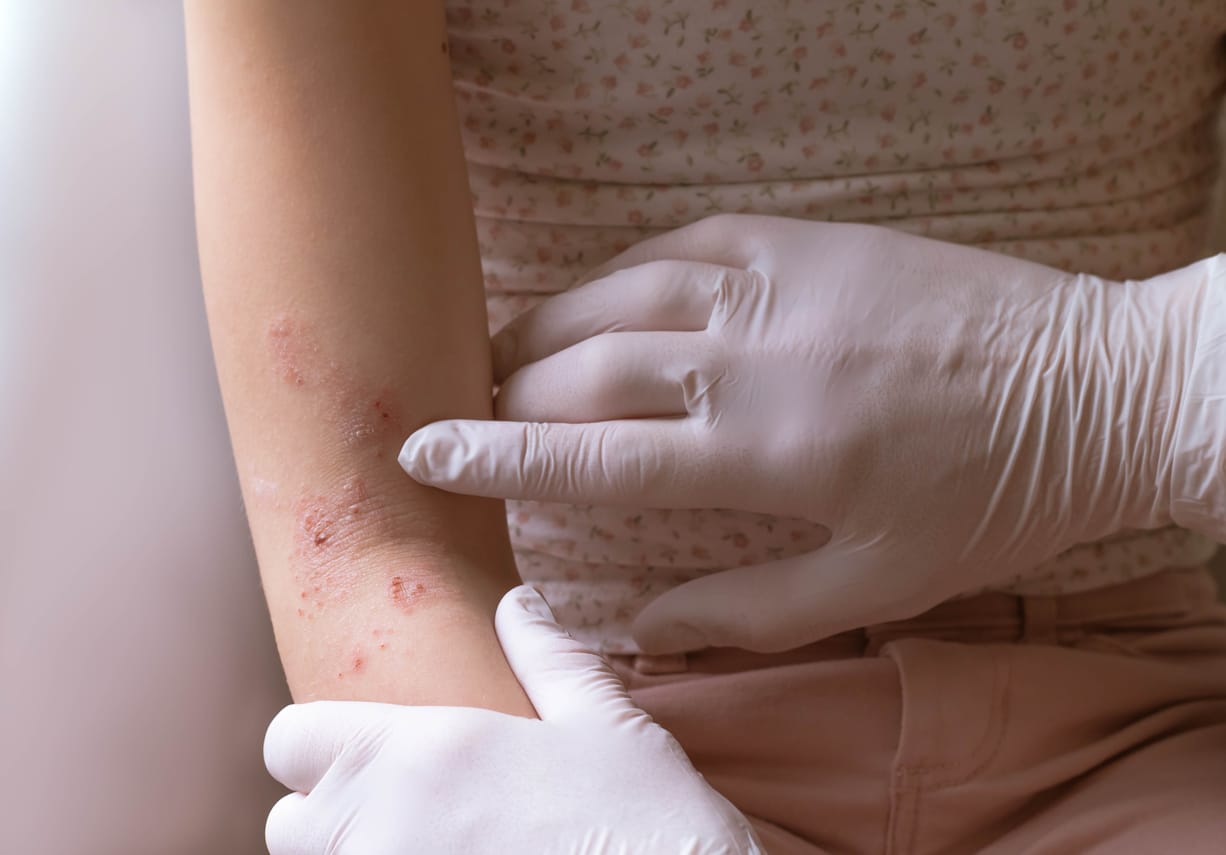
Eczema commonly causes dry, sensitive, intensely itchy skin. During a flare, the skin may become rough, cracked, crusted, or weepy. Common areas include the hands, wrists, elbows, knees, neck, eyelids, and behind the ears. If eczema is already part of your diagnosis, our guide to living with eczema offers tips for managing flare-ups.
Plaque psoriasis often creates thicker, raised areas with silvery-white scale. It may also affect the scalp and nails, and some people develop joint pain or stiffness associated with psoriatic arthritis.
What Can Trigger a Flare?
Eczema may worsen with cold weather, sweat, fragrances, detergents, stress, allergens, or irritating fabrics. Psoriasis triggers can include illness, stress, weather changes, certain medications, smoking, alcohol, and skin irritation. Genetics can also influence psoriasis risk, which we discuss in more detail in our article on psoriasis and family history.
Because some triggers overlap, they are not enough to identify the condition on their own.
What Does a Dermatologist Look For?
A skin examination helps us evaluate the rash’s texture, location, pattern, and history. For suspected eczema, we may also consider possible exposures or allergens. Psoriasis can sometimes be recognized by the appearance and distribution of plaques, as well as scalp or nail changes. If the diagnosis remains uncertain, a small skin biopsy may help distinguish psoriasis from eczema, fungal infections, or other conditions.
Treatment also depends on the diagnosis and severity. Eczema care may include prescription topical medication, oral medication, or biologic therapy. Psoriasis treatment may involve prescription topicals, oral medications, biologics, or phototherapy for appropriate patients. You can read more about light therapy for psoriasis.
Find Out What Is Causing Your Rash
If an itchy or scaly rash keeps returning, a dermatologist can help determine whether eczema, psoriasis, or another condition is responsible. Contact us to arrange an evaluation with Manhattan Dermatology in New York, NY. Call our East 36th Street office at 212-683-6073 or our Park Avenue office at 212-689-9587.