New white patches on the skin can be unsettling, especially when they seem to grow or appear in more than one area. Vitiligo can spread over time, but it is not contagious, not caused by an infection, and not harmful to your physical health.
Patients in New York City turn to Manhattan Dermatology for medical skin concerns that need careful diagnosis and ongoing care. Our team includes Dr. Michelle Levy, a board-certified dermatologist who treats adults and children; Dr. Eric Bowman Jr., a board-certified dermatologist with experience in chronic inflammatory skin conditions; Dr. William T. Long, a double board-certified physician with more than three decades of experience; and Dr. Wendy Long Mitchell, a double-board certified dermatologist and Mohs surgeon.
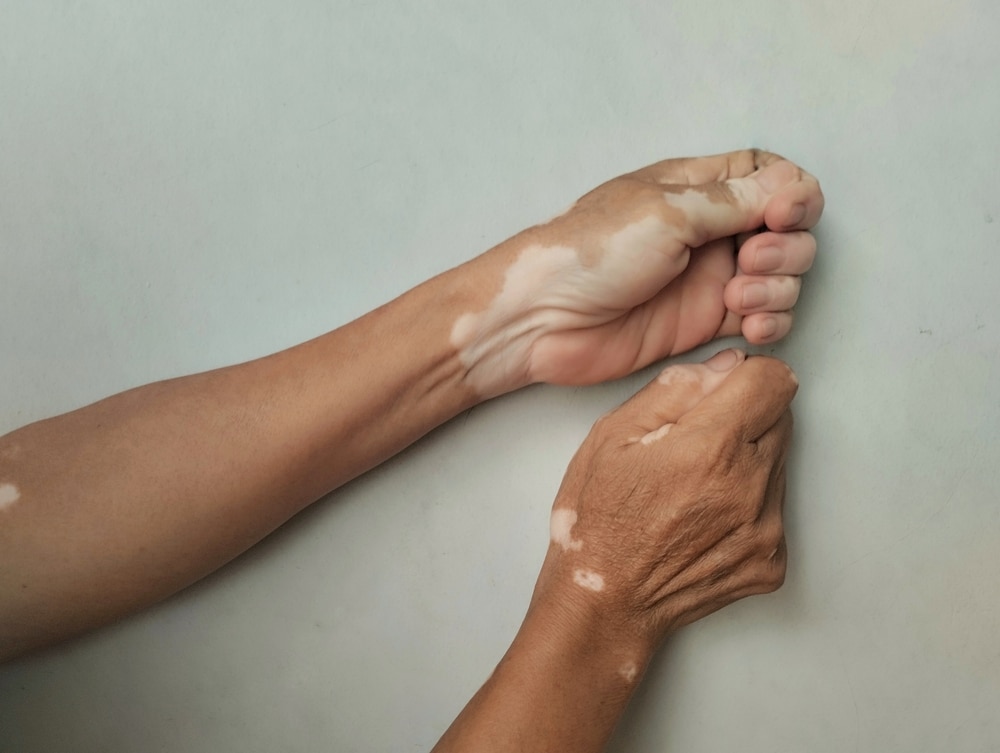
What Vitiligo Looks Like
Vitiligo happens when melanocytes, the cells that produce skin pigment, stop working or are destroyed. This creates white or lighter patches that can show up anywhere on the body.
Vitiligo may appear on the face, hands, fingers, arms, legs, feet, underarms, scalp, or around the eyes and mouth. It can affect all skin tones, though the contrast may be more noticeable in medium to darker skin.
Can Vitiligo Spread?
Vitiligo can expand, but the pattern is different for each person. Some people notice gradual changes over many years, while others develop new patches more quickly. Areas of pigment loss may enlarge, appear symmetrically on both sides of the body, or show up where the skin has been exposed to friction, injury, or sun.
Because lighter patches can have different causes, new pigment changes should be checked by a dermatologist. A skin exam can help confirm whether the change is vitiligo or another concern, such as melasma, post-inflammatory pigment change, or a fungal condition.
What Treatment Can Do
Vitiligo treatment depends on how widespread the condition is, how quickly it is changing, and what your goals are. Some patients want help slowing progression, while others are interested in encouraging repigmentation or softening the contrast between affected and unaffected skin.
Care may include prescription topical medication, phototherapy, advanced therapies, or cosmetic camouflage guidance. Results vary, so follow-up visits are often used to monitor changes and adjust the plan over time.
Why Sun Protection Matters
Areas affected by vitiligo have less melanin, which means they may burn more easily. Sunscreen, protective clothing, and smart sun habits can help protect sensitive skin and reduce contrast between lighter patches and surrounding skin. Our medical dermatology team can help you understand what is causing new white patches and what options may fit your skin. For vitiligo care in New York, NY, contact us at Manhattan Dermatology or call 212-683-6073 or 212-689-9587.