Red cheeks and blemish-like bumps do not always mean acne. For patients in New York, New York, our dermatologists at Manhattan Dermatology evaluate both rosacea and acne before recommending treatment. Board-certified dermatologist Michelle Levy, MD has a particular interest in acne treatment, while Eric Bowman Jr., MD lists acne and chronic inflammatory skin conditions among his clinical interests.
Why Rosacea Can Look Like Acne
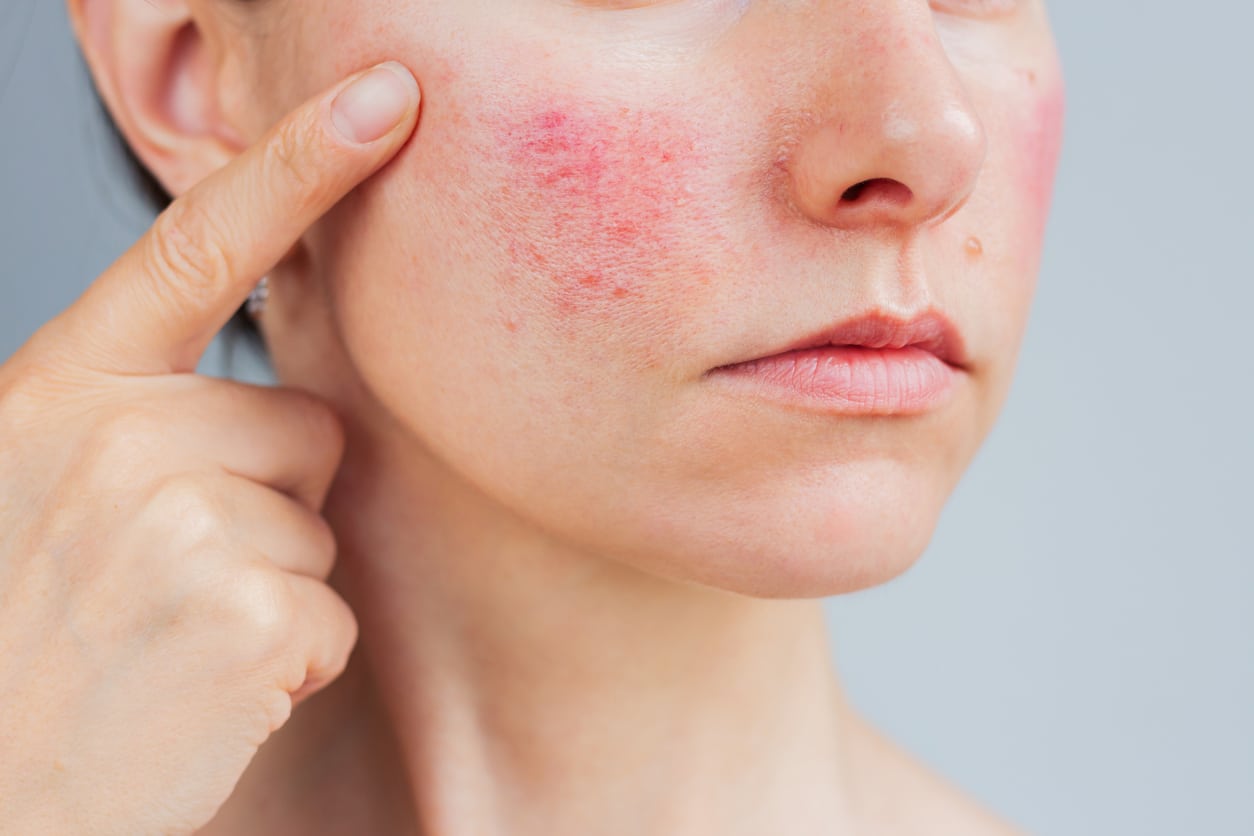
Rosacea often affects the cheeks, nose, chin, and forehead. It may cause persistent redness, flushing, visible blood vessels, burning, stinging, or sensitive skin. Some forms also produce bumps and pustules that resemble a breakout. Our overview of persistent facial redness discusses several signs that can point toward rosacea.
Acne develops when pores become clogged with oil, dead skin cells, and bacteria. Breakouts may include blackheads, whiteheads, papules, pustules, nodules, or cysts and can occur on the face, chest, back, and shoulders. Our guide to different types of acne explains how those lesions can vary.
Clues That Help Us Tell Them Apart
Certain features can help guide an evaluation:
- Flushing or lasting facial redness: More typical of rosacea.
- Visible facial blood vessels: Often associated with rosacea.
- Blackheads and whiteheads: Characteristic of acne rather than rosacea.
- Deep nodules or cysts: Forms of inflammatory acne.
- Eye irritation: Red, watery, or gritty eyes may occur with ocular rosacea.
These signs are helpful, but some people can have acne and rosacea at the same time.
Why the Diagnosis Matters
Rosacea-prone skin may already be sensitive, so treating every bump as acne can lead to unnecessary irritation. Our dermatologists examine the skin, review your symptoms and history, and consider other possible causes before choosing a treatment.
Rosacea care may include topical or oral prescription medication, skin-care guidance, trigger management, and vascular laser treatment such as Excel V for select patients with persistent redness or visible vessels. Acne treatment may involve topical or oral medication, professional extractions, cortisone injections, chemical peels, or procedures for lingering redness, texture, and scars. Adults with ongoing breakouts can also read more about adult acne causes and treatment.
A physician evaluation is especially useful when medical and cosmetic concerns overlap. Understanding what is causing the redness or bumps helps us choose options that fit both your skin condition and your goals.
Get Answers About Facial Redness
If redness or recurring bumps have left you wondering whether you have acne, rosacea, or both, contact us for an evaluation at Manhattan Dermatology in New York, NY. Call our East 36th Street office at 212-683-6073 or our Park Avenue office at 212-689-9587.